About Me
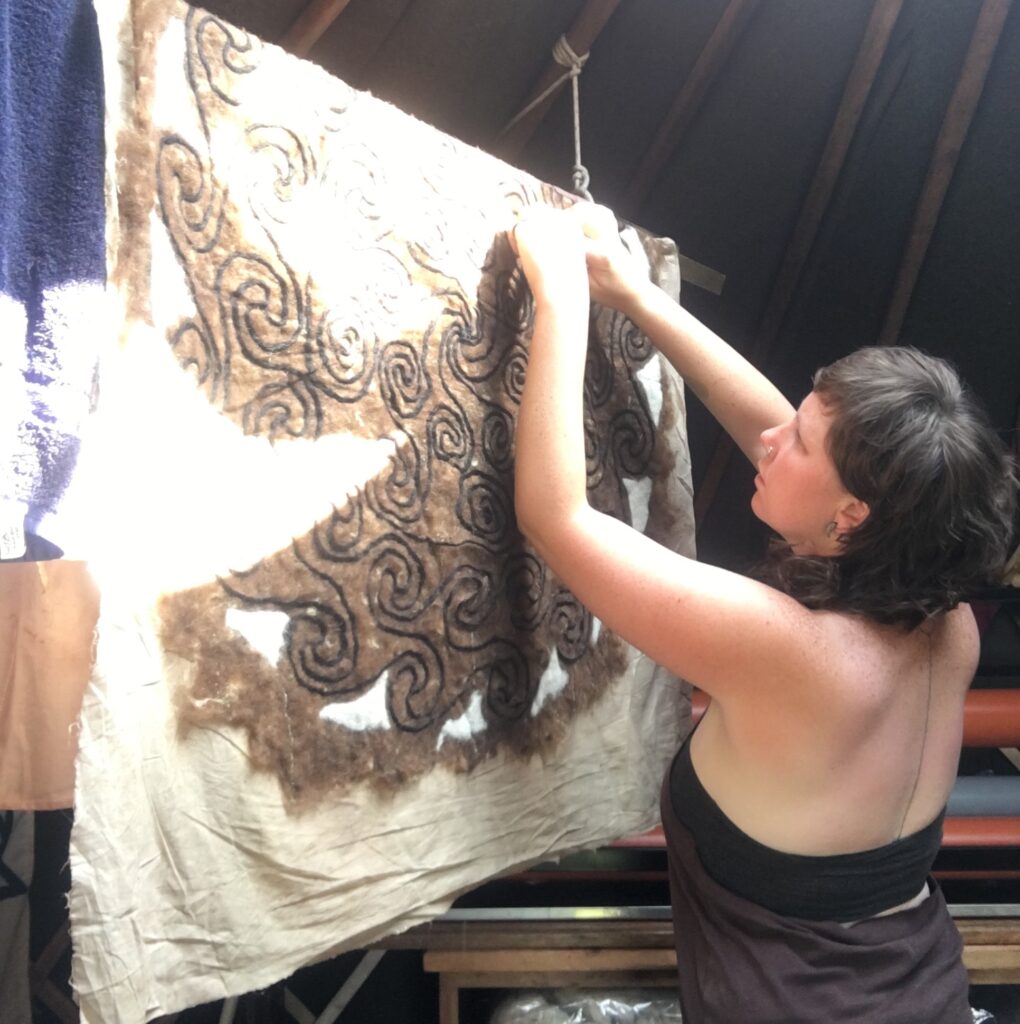
My name is Jenny Muirhead. I currently work from my yurt workshop in Auchendinny, Scotland. For the most part, I’m a feltmaker, working with raw wool from Scottish sheep. My main skills are in all things wool; weaving, spinning, knitting, sewing, as well as foraging, woodwork, leatherwork, basketry and some recent adventures in traditional tanning. I dabble in all manner of traditional crafts and generally take a DIY approach whenever and wherever I can.
I grew up in rural Dumfries and Galloway, in an area where much of my family has lived for many generations. Classically, as a teenager, I took this completely for granted, and only upon moving to Glasgow to study Sculpture and Environmental Art did I start to learn how privileged I was to have grown up in, and to feel such a strong connection to the land that I’m from. Throughout my time in Glasgow I increasingly felt a longing to get out of the city, and as my creative work developed, I became obsessed with craft. To be clear on what I mean by craft, its defined as ‘an activity involving skill in making things by hand’. This meant for me learning to sew, mend, weave and build, but also cooking, baking, DIY, rewilding, foraging, self-organising and grassroots community building. Through crafting anything and everything, I learned about different materials; their properties, and how to trace them back to their source. I found that my two great loves were intrinsically linked, and crafting became a way for me to connect with nature. I aim to work with the materials I can find and forage, from plants and animals, to get back to the root of things and return home to the land. Living history has always fascinated me; we can learn so much from how our ancestors lived here. With learning the traditional crafts of our ancestors comes a connection to our heritage and the environments and circumstances in which they lived. A lense with which to see possibilities, followed by an opportunity to rewild ourselves.
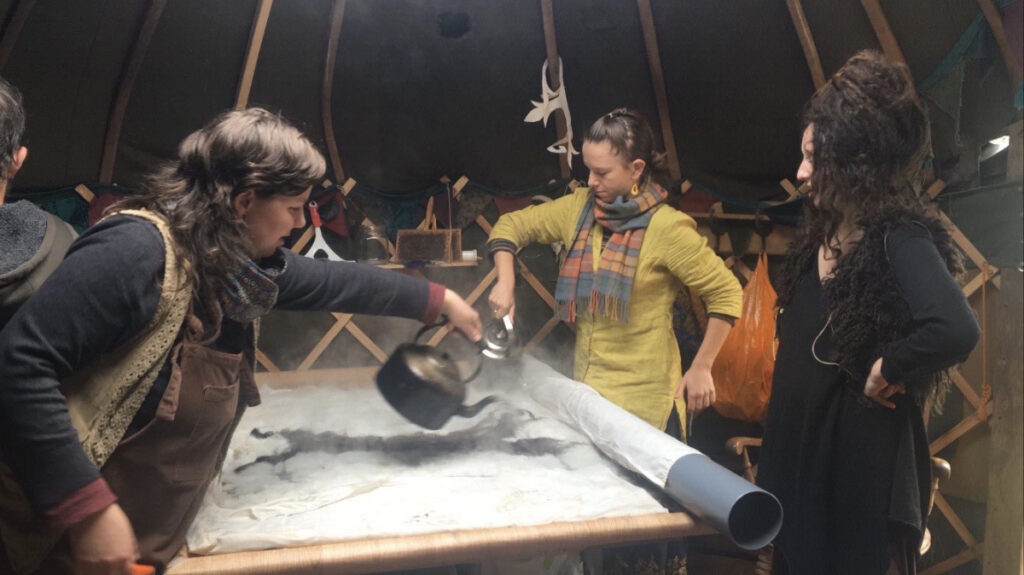
My strongest childhood memories are of time spent by the river. As an adult, I still find going to the river carries some meaning deep in my bones that I can’t quite put words to. Water is so deeply medicinal, and perhaps this is why feltmaking draws me in. The alchemy of it, the simplicity. Using water to turn wool into fabric.
About Feltmaking
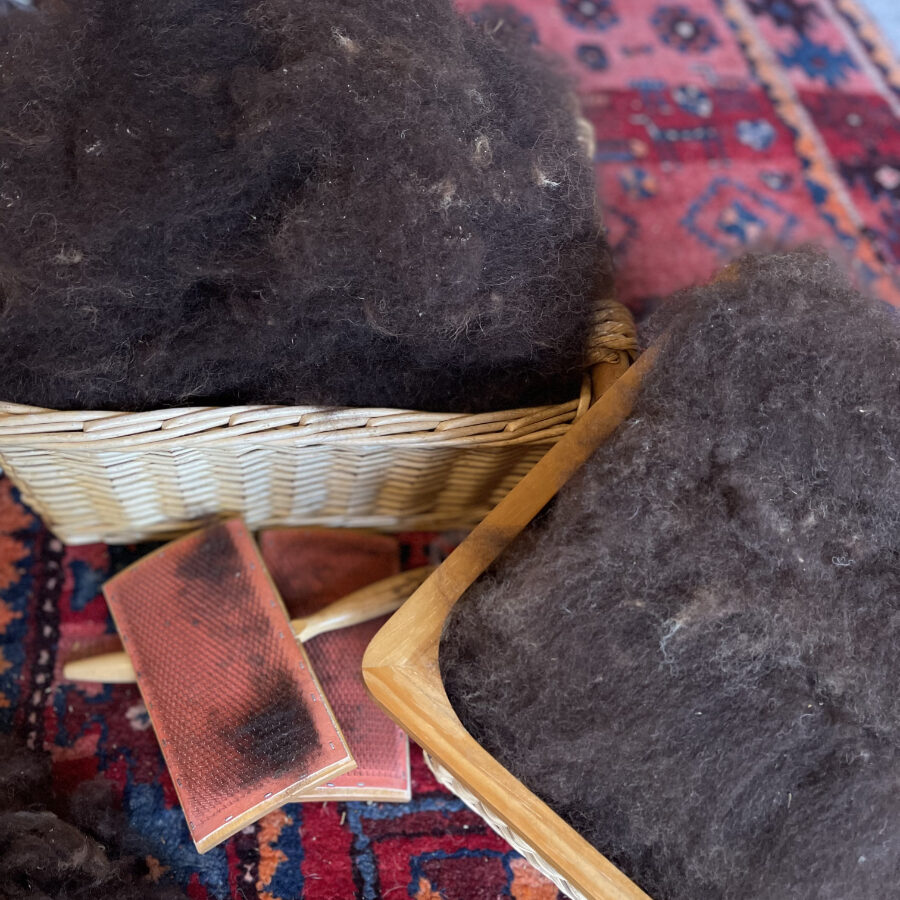
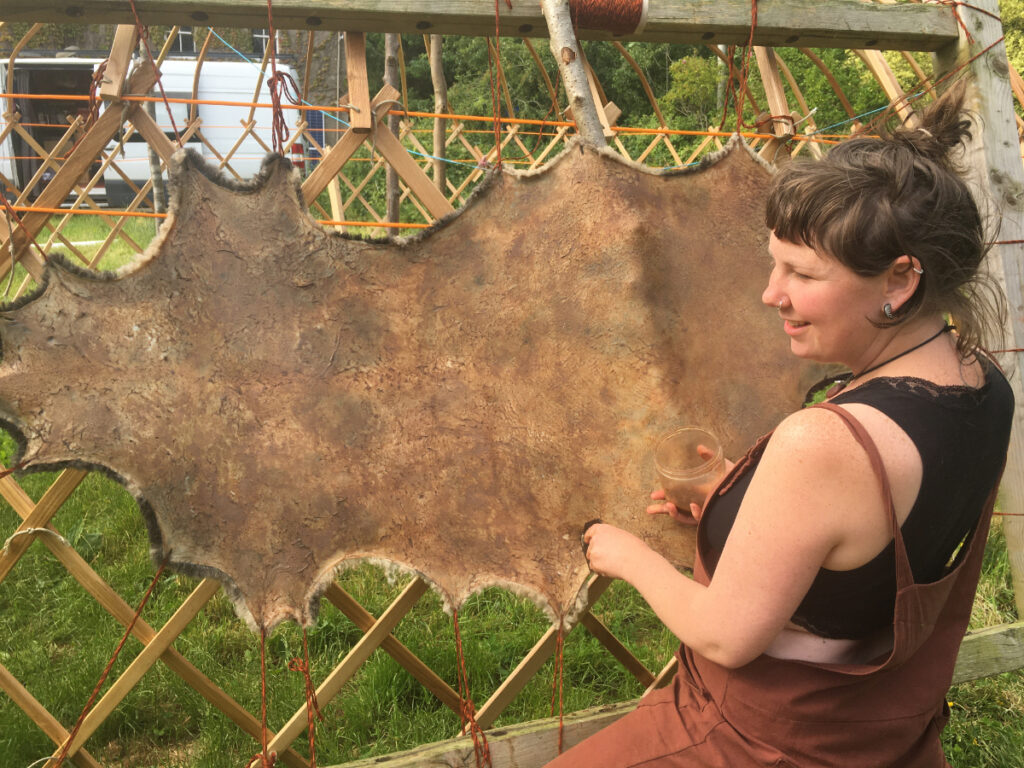
I work with raw wool (unprocessed wool straight from the sheep) as much as possible. I find this connects me to the wider world of wool; the life of the sheep, the shepard, the landscape. I value the sense of community and the understanding of material that I gain from working in this way, as well as drawing on the rich culture here of working and living from the land. Wool is intimately tied to Scottish heritage; sheep have grazed these lands since 4000 BC when they were introduced by Neolithic settlers. I endeavour to honour our Scottish wool heritage by using Scottish wool to make quality products that are fairly traded, environmentally sound and sustainably produced. Wool is an incredible natural resource that is in many cases a byproduct of the meat industry. Amongst other qualities, wool is naturally anti-bacterial, anti-microbial, anti-allergy and fire retardant, then once its reached the end of its life, undyed or naturally dyed wool can be returned to the ground and will biodegrade completely.
Whilst Scotland has a rich and distinct heritage of spinning, dyeing, weaving and knitting with wool, there is significantly less evidence of felt making happening here aside from its almost exclusive use in hat making and waulking pre-woven wool fabric. Sensitively drawing on other cultures’ knowledge of feltmaking allows me to make better use of a resource that is so abundant in Scotland, celebrating our heritage whilst also finding new ways to use this material sustainably and to the full extent of its many redeeming qualities.
About Baby Woollies
I make clothes for babies and toddlers made from jumpers that have been shrunk in the wash. The shrinking process is a form of felting and it creates a wonderfully dense fabric that’s ideal for keeping little ones warm. It’s always a joy to receive a jumper from someone that would have otherwise gone in the bin and give it a new lease of life. Wool is natural and breathable, and particularly lambswool and cashmere are soft against delicate skin. All baby woollies are one of a kind pieces that can be custom ordered to your preferences. If you shrink your favourite jumper, please consider sending it to me to be recycled. You can gift it to a tiny person in your life.
About Sewing and Mending
I offer a mending service for a variety of different clothes and fabrics. If you get in touch with me, please tell me what it is that you want mended and in what way it’s damaged; pictures can be helpful here. I will then get back to you with a rough estimate on price. I work on an hourly rate so sometimes costs can vary but I will always keep you in the loop. Environmentally speaking, it’s better to mend something than to buy new, and mending gives clothes wonderful character. In the Japanese tradition of wabi-sabi, finding acceptance and beauty in imperfection.
About Plant Fibres and Dyes
I love foraging. It feels so right, so instinctual and so empowering to walk in nature and find plants that can be used; to eat, weave, dye, make tools or use medicinally. My journey with plants is lifelong, and I’m always looking for ways to bring them into my work. This has so far come in the form of plant dyes, basket making, woodwork and seasonal crafting. I make my own herbal remedies and love keeping a garden of useful plants when I have space to do so. The seasonality of plants allows us to connect with and move through the changes that come throughout the year, and to get to know them as old friends who come back time and time again, comfortingly familiar.
Environmental and Local Commitment
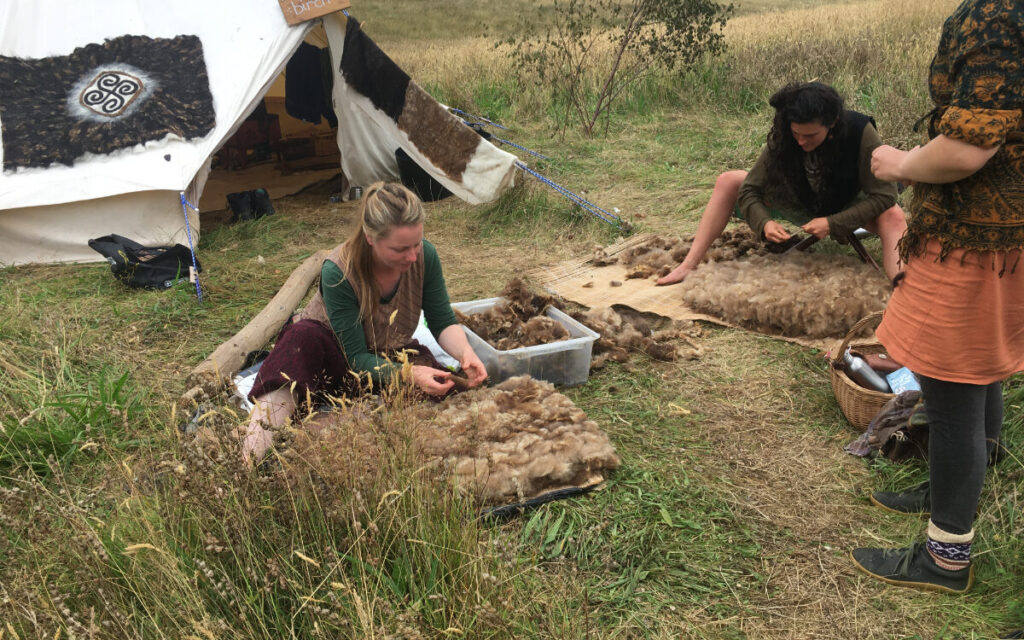
I make quality products in a way that is sustainable; never use harmful chemicals and always consider the environmental implications of what I do. I prioritise using local Scottish wool, and wool that would otherwise be wasted and aim to raise the profile of wool as a versatile material and valuable resource. I aim to celebrate our rich heritage of Scottish wool, and find innovative ways to value it.
At present, I buy some wool that’s already been processed, but in the coming years aim to process all wool straight from local sheep on a small scale. I’m always keen to build relationships with small holders, crofters and farmers, local makers and craftspeople so that I can carefully source wool thats come from sheep who are well cared for.